NOVEMBER 2025
Cathedral of St. Joseph
Jefferson City, Missouri
Buzard Pipe Organ Builders
Champaign, Illinois
From the President and Tonal Director
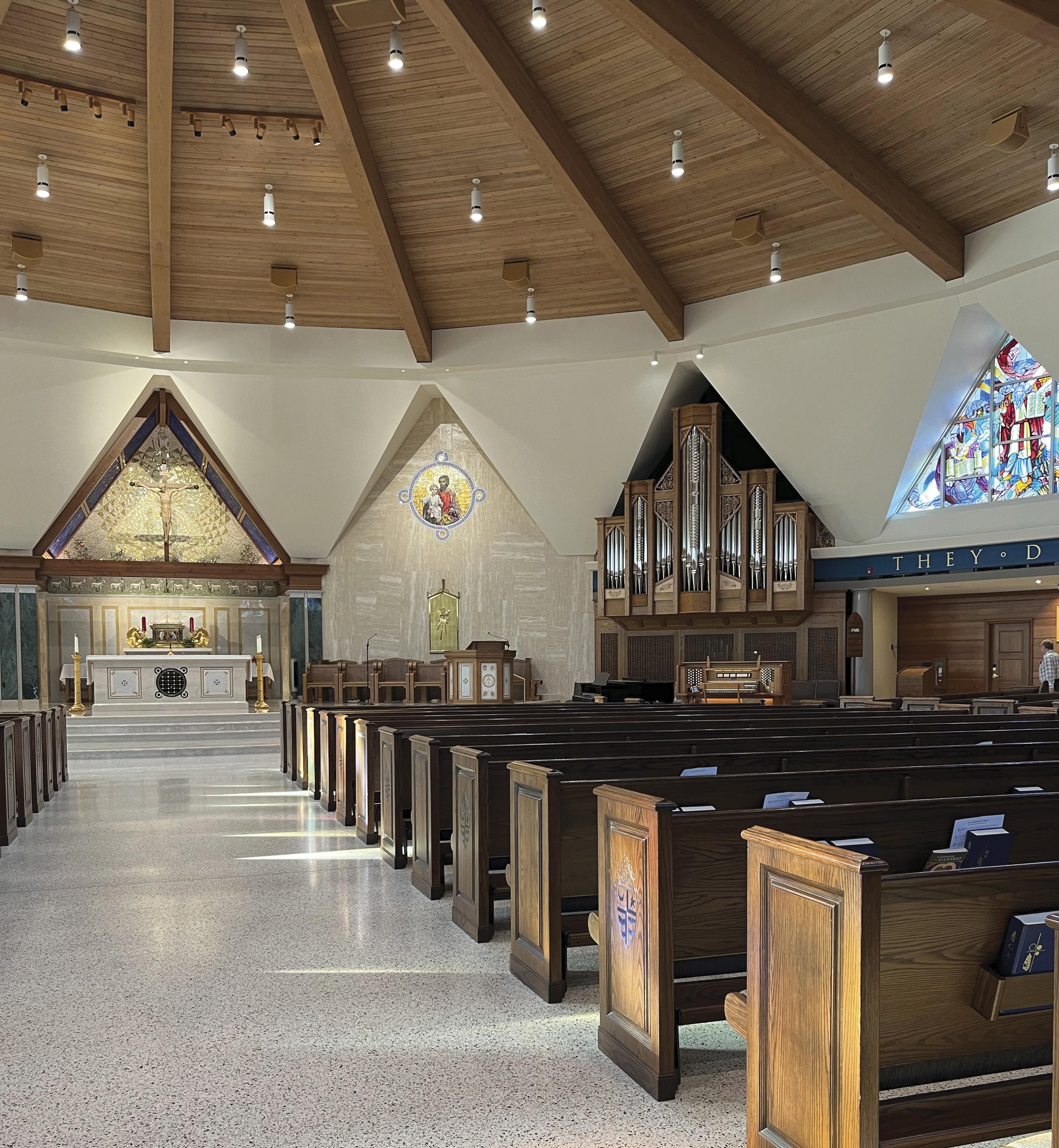
The recently renovated Cathedral of St. Joseph in Jefferson City, Missouri, includes a combination of circles, triangles, and straight lines without parallels. For those of us who delight in symbolism, these are powerful statements of Eternity, the Trinity, and Truth. The pipes of the new Buzard organ, Opus 49, are located in one of those triangular spaces, embellished by the casework and facade. The strong geometric lines are warmed with other appropriate visual elements: grapes (“I am the Vine; you are the branches”), dogwood blossoms (legendary reminders of the Crucifixion), and a lily (the flowering of St. Joseph’s staff).
As organbuilders, we wanted to create an instrument that would address the acoustical challenges inherent in that geometry while also enriching the spiritual life of a worshiping congregation. Many people associate a pipe organ only with the powerful impact of hearing it at full tilt. And while all the tonal resources of this instrument can be blended into a rich tapestry of sound that lives up to that expectation, we have also lavished our attention on each component of that tapestry, so that any combination of stops—from the gentlest to the most commanding—rewards the listener with equal richness.
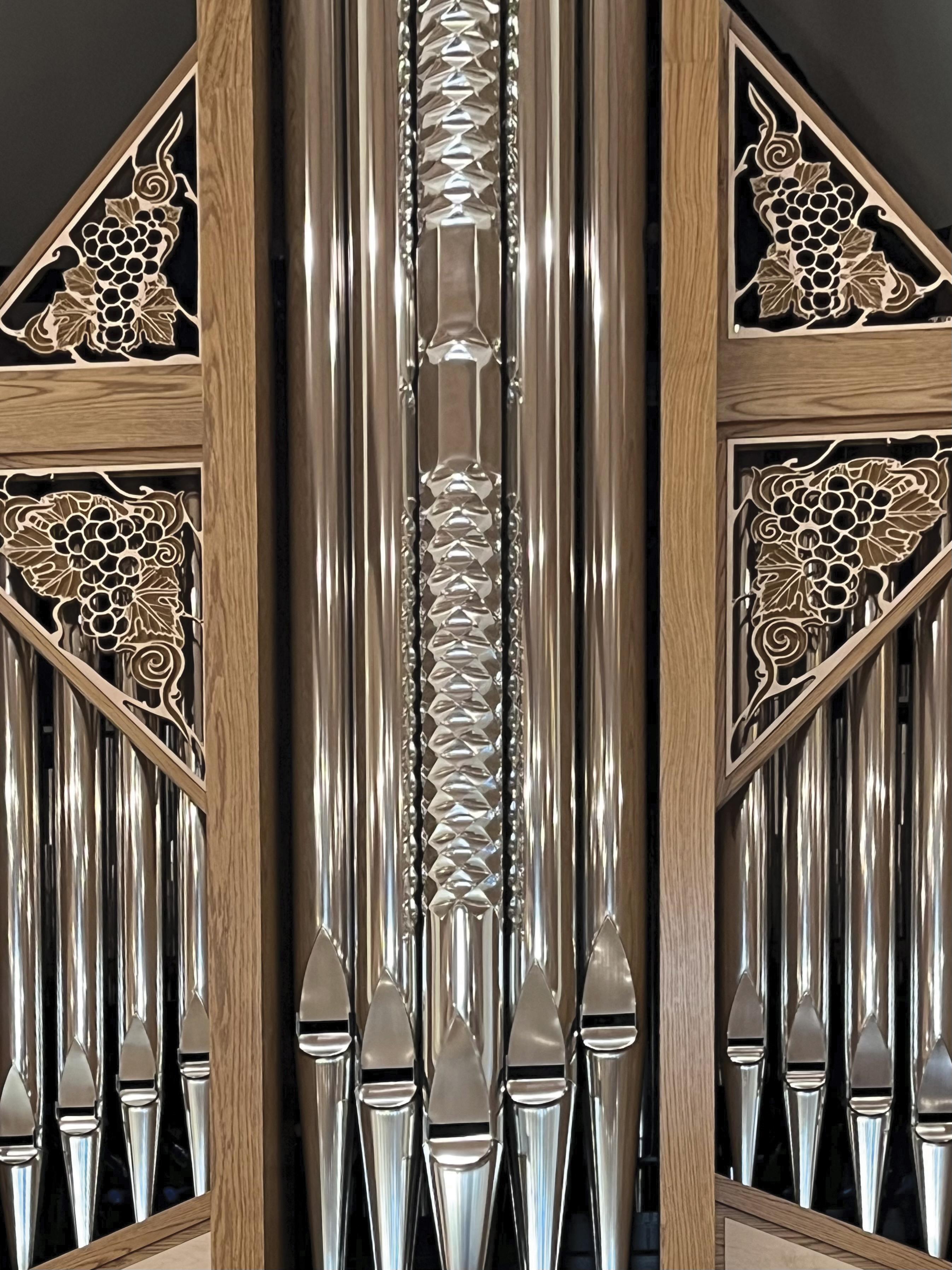
Embossed facade pipe and pipe shades
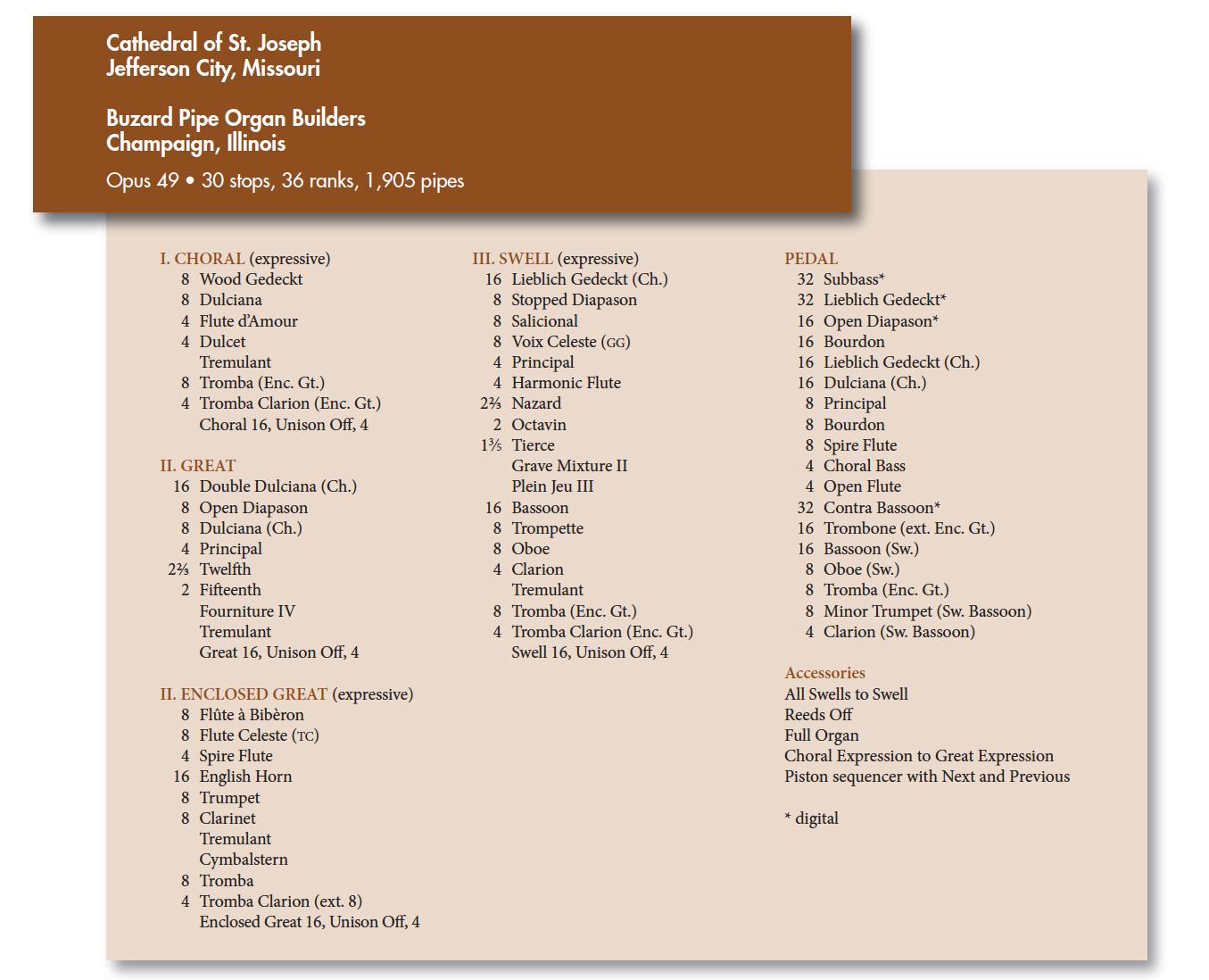
Although modest in size, the cathedral’s new organ is in keeping with our other instruments, featuring a wealth of tonal colors, classical scaling, and voicing with a slight Romantic cast. A portion of the Great is under expression, as in several of our other recent installations. Two extended ranks have been placed in the lower level of the case to provide the cathedral choir with more direct tonal support, allowing the remainder of the organ to “color” the accompaniments, lead congregational singing, and render solo literature.
Drawing inspiration from classical organbuilding traditions while integrating modern technological advancements, this instrument resonates with rich, harmonious tonal color that enhances congregational worship and reaches out with beauty to the community at large. From the largest pipe to the most intricate wooden joinery and the smallest moving part, every component was lovingly crafted with meticulous care, ensuring both aesthetic appeal and acoustic excellence. It brings us great joy to entrust to the cathedral congregation the work of our hands, minds, and hearts. May that joy continue to brighten the lives of all who hear the organ’s music, now and in the future.
We are grateful to the Most Reverend W. Shawn McKnight, bishop, and project consultant Fr. Jeremy Secrist, diocesan curator of pipe organs, for the opportunity to craft this instrument.
Ken Cowan gave the first public recital on Buzard Opus 49 in June 2025.
Fred Bahr
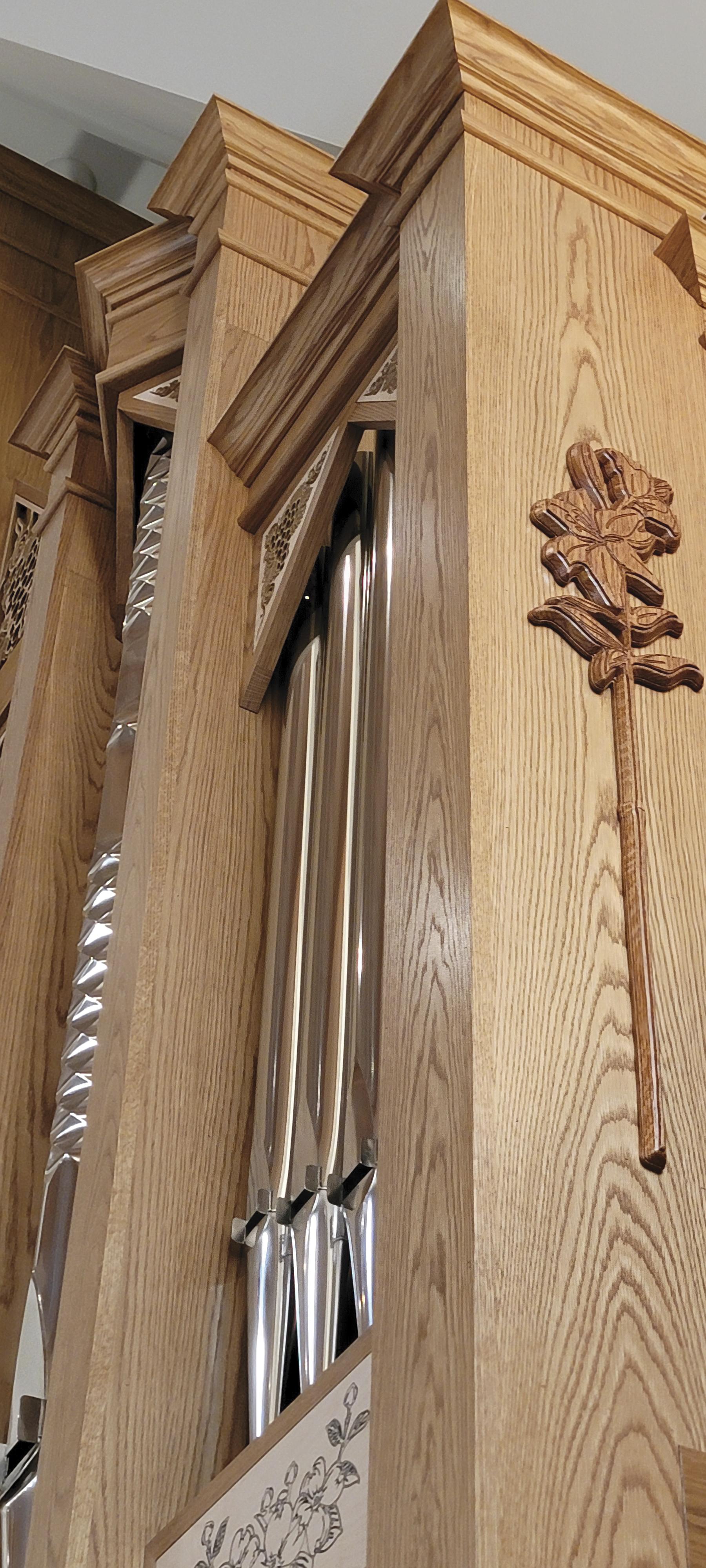
Casework decoration
From the Director of Sacred Music
The commissioning of Buzard Opus 49 was a major factor in my decision to accept the position of director of sacred music at the Cathedral of St. Joseph in 2023. Observing the installation, which began in April 2024, I was impressed with the attention to detail and the creativity of the engineering. Everything from preparation of the chamber walls and ceiling to accessibility for service technicians was considered in the design. And the facade makes a stunning addition to the newly renovated sanctuary.
The organ features 36 ranks and 30 independent registers squeezed into a very small space—a challenging feat that was achieved through a variety of pipe construction techniques. Most of the pipework is on the upper level, but the Choral division stops are located on the lower level, directly behind the music area. My singers find it much easier to hear pitches played on these ranks, which all consist of flue pipes designed to not overpower them. The rest of the instrument speaks over the choir’s heads and into the sanctuary to support congregational singing and fill the space for recitals.
The organ boasts a vast color palette and impressive tonal flexibility. And because every division has at least a portion of its pipework under expression, I can use any of the reed stops without worrying about the dynamics being excessive for the assembly.
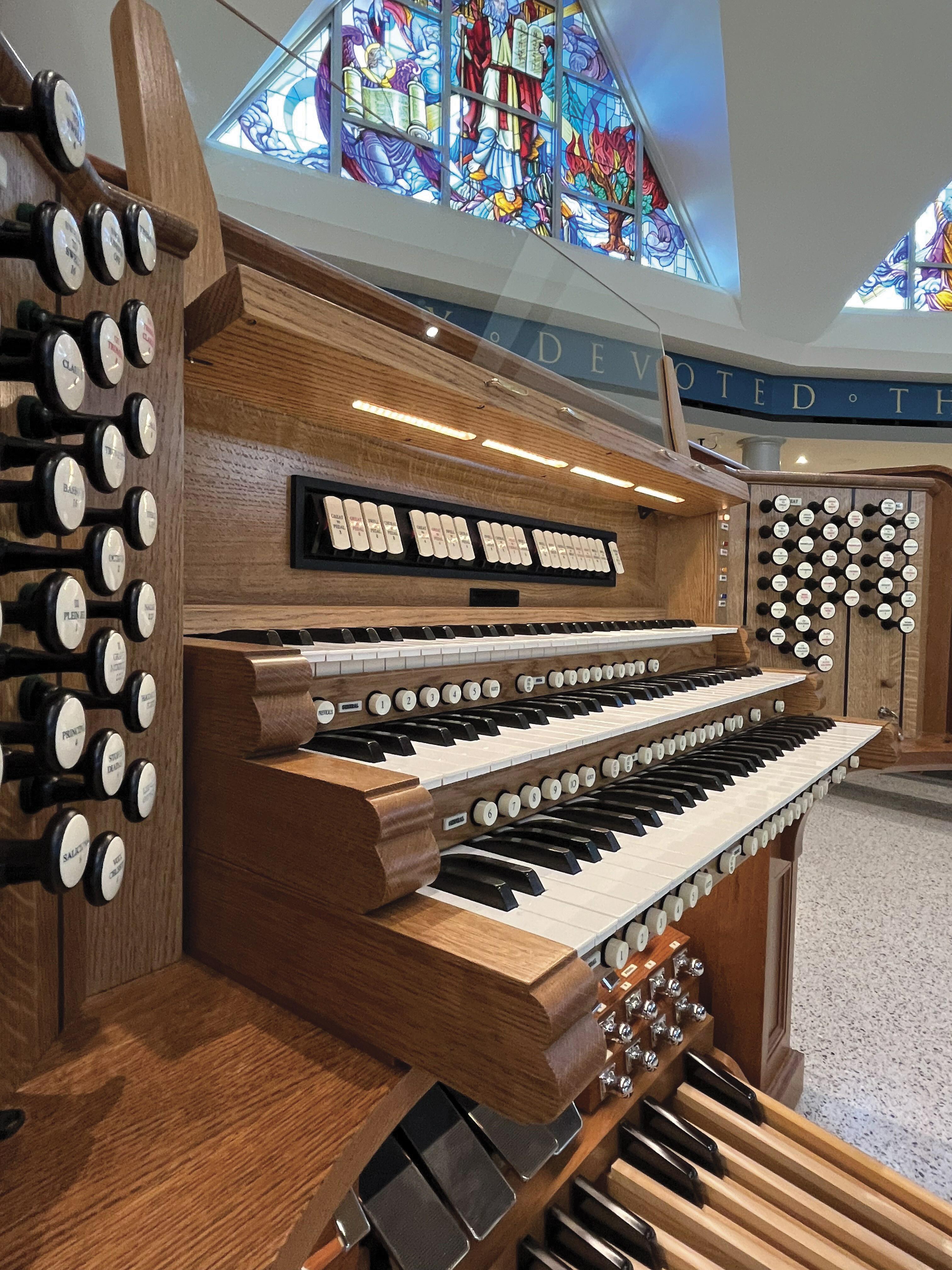
The largest reed, the Tromba, is playable from any division and sings out over the full organ. It is one of the instrument’s three distinct sets of chorus reeds, a requirement for French Romantic music that is lacking in many three-manual American organs. The vast array of couplers includes a separate Unison Off knob and intramanual couplers for the Great reeds. This allows me to transfer reed stops from the Great to other manuals while still accompanying them on their home manual—a feature that enables me to play repertoire that would normally require a much larger instrument. I am grateful to Buzard for constructing such a unique organ, and I’m overjoyed that I get to play it every week.
I thank Archbishop W. Shawn McKnight (former bishop of Jefferson City and now archbishop of Kansas City), former cathedral pastor Fr. Louis Nelen, and current pastor Fr. Stephen W. Jones for their support of this project. Special thanks to Fr. Jeremy Secrist (diocesan curator of pipe organs) and music director emeritus Thomas E. Halpin for all of their work on this project prior to my arrival—and to all of the generous donors who made this undertaking possible.
Andrew Meagher